

Settling In
Separation Anxiety at Nursery Drop-Off: What Helps and What to Expect
Written by Vivian, Owner & Director at Blossoming Minds Daycare

Separation anxiety at drop-off is one of the things parents ask me about more than almost anything else. It does not matter whether a child is coming in for the first time or has been with us for months. That moment at the door can be genuinely difficult, and it brings up a lot for parents too.
I have been working in early years for a long time, and I can tell you honestly: the tears at the door are normal. They are not a sign that something is wrong, or that your child is unhappy, or that nursery is the wrong choice. They are a sign that your child loves you and that attachment is working exactly as it should.
What I want to do here is share what we actually observe at Blossoming Minds Daycare Greenwich, and what tends to help.
Why Drop-Off Can Feel So Hard
For young children, the concept of time is still developing. When a parent leaves, a toddler or baby has no reliable sense of when they will come back. That uncertainty is unsettling, and crying is a completely natural response to it.
What we notice is that the anxiety is often at its peak right at the door. Many children who are in tears at 8.30am are happily absorbed in play within ten or fifteen minutes. This is not always reassuring to hear in the moment, I know. But it is genuinely what we see, and it is why we send photos throughout the day so parents can see how their child is getting on once they have settled.
What We Do to Help
Our settling-in process is built around going slowly. We do not expect a child to walk in on day one and simply get on with it. Before any independent sessions begin, families join us for short visits together so the nursery becomes a familiar place before we ask a child to be here without their grown-up.
Every child has a key person who gets to know them properly during this time. That relationship matters more than people sometimes realise. When a child is distressed at drop-off, having a warm, familiar adult to go to makes a real difference. It is not just about comfort in that moment. It builds genuine trust over time.
Some things that we find help at drop-off:
- Keep goodbyes warm but brief. Long drawn-out farewells can actually make the moment harder. A confident, loving goodbye sends the message that you trust us to take care of them.
- Have a consistent routine. Children settle faster when the drop-off follows the same pattern each time, whether that is a particular cuddle, a phrase you always say, or leaving at the same time each morning.
- Tell them you are coming back. It sounds simple, but children benefit from hearing it clearly. "I am going to work now, and I will pick you up after lunch."
- Avoid sneaking out. It feels kinder in the moment, but it tends to increase anxiety over time because children learn they cannot predict when a parent will disappear.
- Talk to us. If drop-off has been particularly hard, let us know. We will pay extra attention that morning and update you as soon as your child is settled.
When It Goes On for Longer
Most children move through the hardest phase of separation anxiety within a few weeks. Some take a little longer, and that is completely fine. We tailor our approach to each child. For some families, starting with one or two sessions a week before building up to fuller days makes a significant difference.
If a child is still finding drop-off very difficult after several weeks, we will have an honest conversation with you. Sometimes there is something specific going on at home, such as a new sibling, a house move, or a change in routine, that is making things harder. Sometimes we simply need to revisit the settling-in process. We will always tell you what we are observing and work with you on next steps.
It is also worth saying: the anxiety does not always belong only to the child. Many parents, particularly those returning to work for the first time, are managing their own feelings about leaving. That is completely understandable, and we try to support the whole family through the settling-in period, not just the child.
The Rhythm of a Morning Here
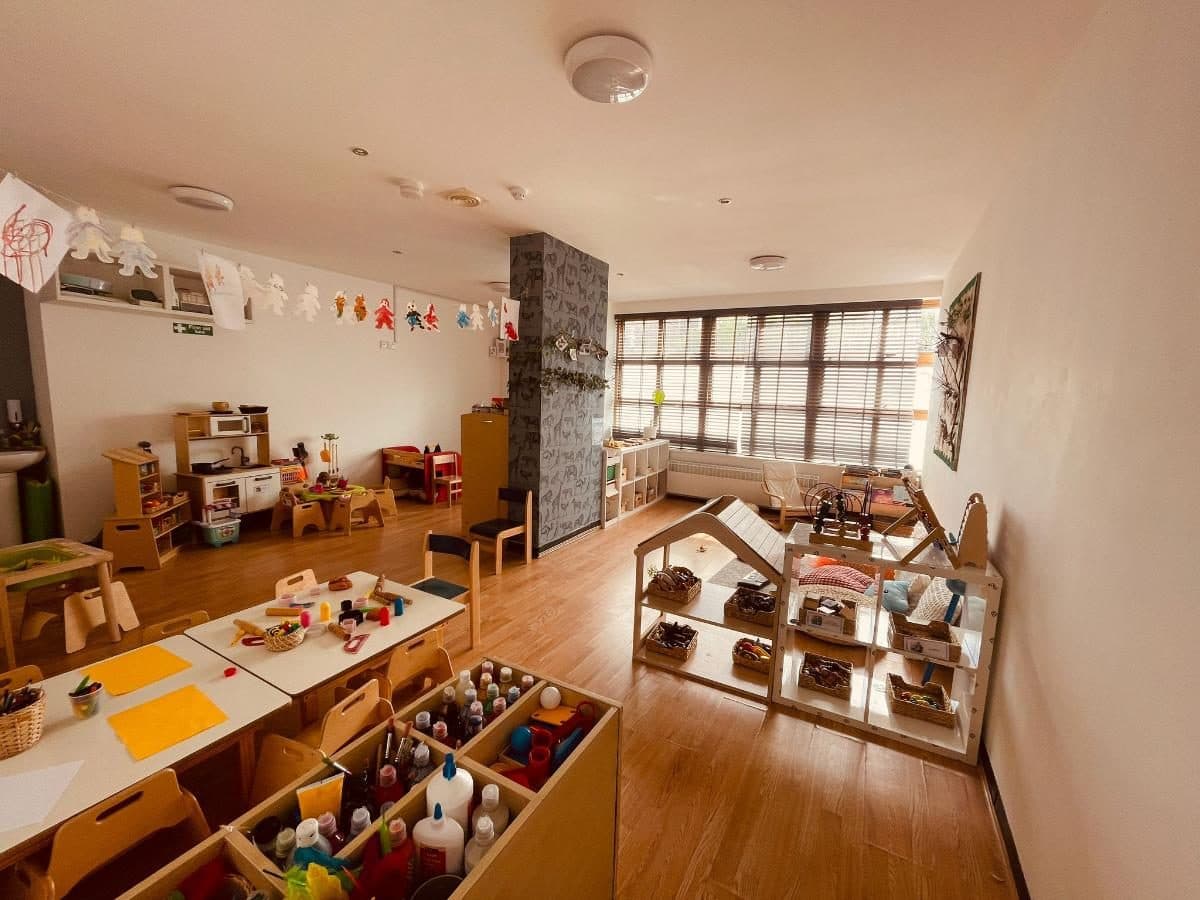
One thing that helps is knowing what your child's morning actually looks like. At Blossoming Minds, mornings are unhurried. Breakfast is available, there is no rush to sit down or perform. Children can move into play at their own pace, and our indoor Energy Hub gives them space to be active from the moment they arrive. By the time most parents are at the bus stop, their child is already doing something they enjoy.
That rhythm is intentional. A calm, consistent morning makes it easier for children to feel safe, and feeling safe is the foundation for everything else.
If you are thinking about a nursery place and want to get a feel for how we work before committing to anything, you are very welcome to book a show-around at a time that suits you. If you would prefer something more relaxed, our free weekly Stay and Play sessions on Friday mornings are open to babies and toddlers aged 3 months to 3 years and are a lovely way to explore the space with your child beside you. Register for Stay and Play and come and see us.
Come and see us for yourself
Book a relaxed tour of Blossoming Minds Daycare and meet our team.
Book a tourOther guides you might like
Settling In
What to Expect in Your Child's First Week at Nursery
The first week at nursery brings a mix of emotions for children and parents alike. Here is what we typically see at Blossoming Minds, and how we support families through every stage of settling in.
Tips for Parents
2-Year-Old Funding in Greenwich: Who Qualifies and How to Apply
Not sure whether your two-year-old qualifies for funded childcare in Greenwich? This guide walks through both routes to eligibility and exactly how to apply through the Royal Borough.
Tips for Parents
30 hours funded childcare in Greenwich: what you actually get, and what nurseries don't tell you
The 30 hours funding sounds straightforward, but the reality can catch families off guard. Here is what it actually covers, what it doesn't, and the questions worth asking before you commit to anything.
Frequently asked questions
How long does separation anxiety at drop-off usually last?
Most children move through the hardest phase within a few weeks of settling in. Some take a little longer depending on their age, temperament and any changes happening at home. We keep parents updated throughout and will always have an honest conversation if we feel the settling-in process needs to be revisited.
What should I do if my child is still crying when I leave?
Keep your goodbye warm and consistent, and let us know it has been a hard morning so we can give your child extra attention. We will send you a photo or message once they have settled. In our experience, most children calm down within ten to fifteen minutes of the door closing, even when the goodbye was tearful.
How does Blossoming Minds Daycare help children settle in?
We go slowly and tailor the process to each child's age and needs. Families start with short visits together before building up to independent sessions over a couple of weeks. Every child has a key person who gets to know them properly before we ask them to be here alone. Some families prefer to begin with one or two sessions a week, which is completely fine.
Can I visit before my child starts?
Yes, and we would encourage it. You can book a show-around at a time that suits you for a private look around the nursery. Alternatively, our free Stay and Play sessions run every Friday from 10am to 11am and are a relaxed way to explore the space with your child before making any decisions. No commitment is needed for either.