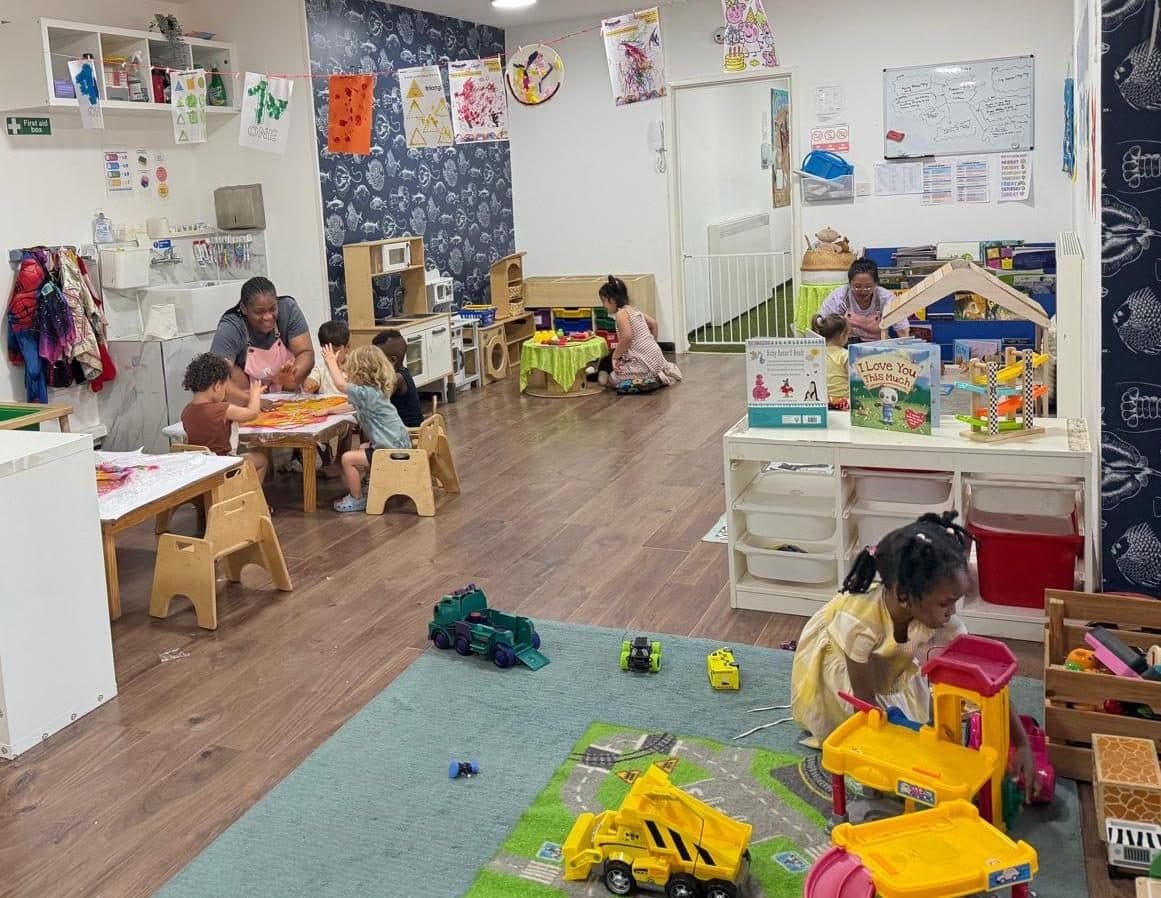

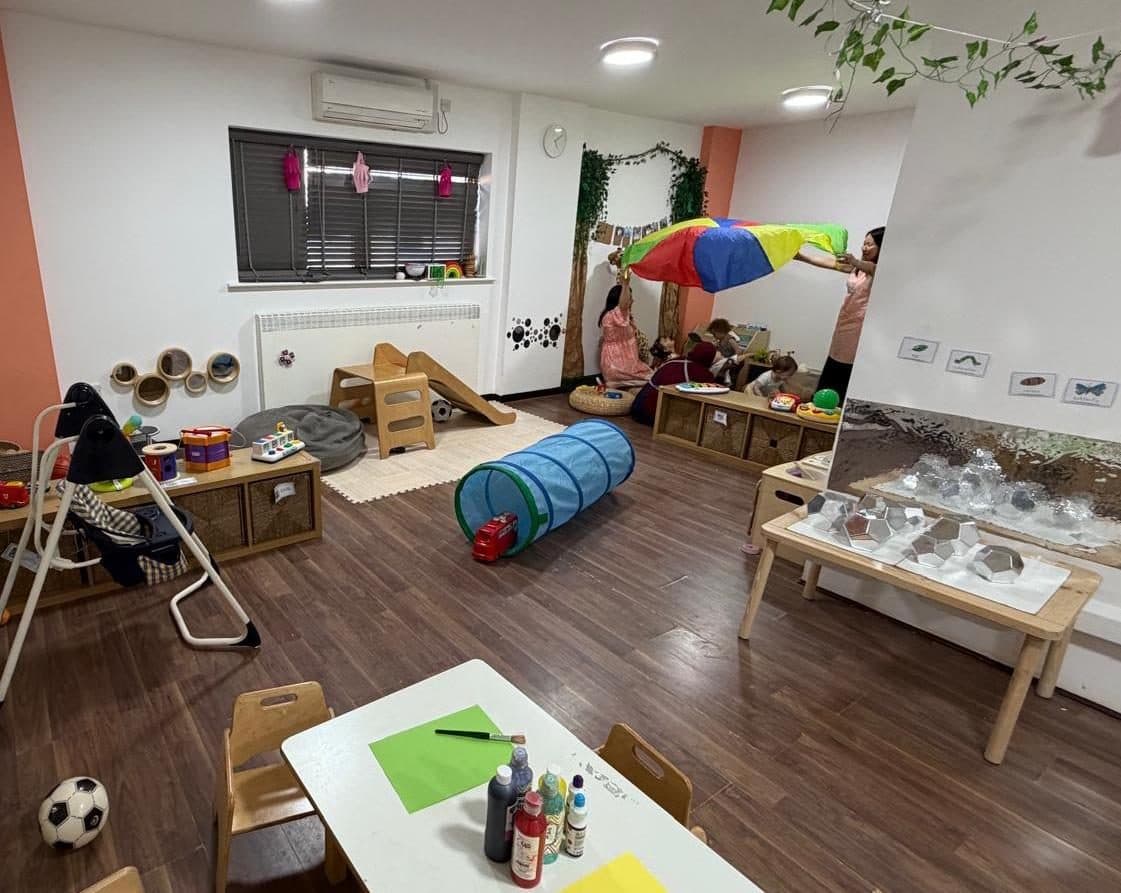
 0 - 2 years
Daffodil
- Ratio
- 1:3
First words, first trust, first discoveries. This is where everything begins.
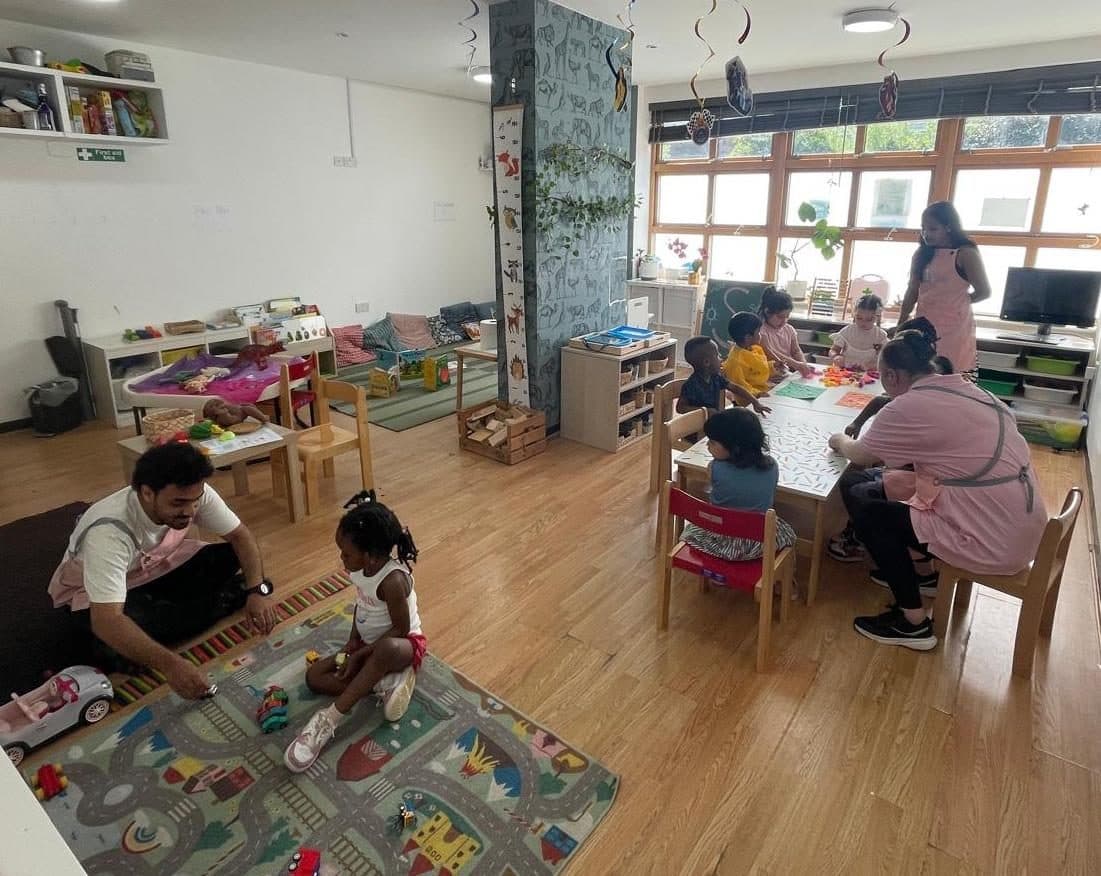
By the time children reach Sunflower, something shifts. Friendships stop being about playing alongside someone and start being about playing with them, which is exactly what you would expect at this age, and it is at the centre of how we shape the room. Reading corners, art, maths and imaginative play all have their place in the day, but so does the quieter work of learning to share an idea, wait a turn, or notice when a friend is upset. The curriculum here is doing two jobs at once: building the literacy, number and writing foundations that school will expect, and giving each child the chance to work out who they are along the way.
We keep a ratio of one adult to eight children in Sunflower, which gives staff enough presence in the room to sit with a child working through big feelings without the day grinding to a halt around them. Rest is never forced. Some children still need a quiet spell in the afternoon and we make room for that, comforters from home included. Others are long past napping and use that time for something calmer, a book or a puzzle, without being made to lie down for the sake of routine.
Outdoor time is shared with other rooms rather than being a private garden for Sunflower alone, so it is built into the week rather than promised every single day. What we can promise is variety once children are out there, plus regular trips beyond the nursery gates to local parks, playgrounds and libraries, because a good chunk of early learning happens away from a classroom table. Meals are freshly cooked on site and eaten together, which does more for language and table manners than most worksheets ever could.
Come and see it for yourself
Book a tourOur last Ofsted inspection rated us Good, and inspectors noted that children are confident to express themselves, sharing opinions and seeking others out to play while staff offer praise and encouragement. That is precisely the tone we aim for in Sunflower: children who feel secure enough to speak up, try something new, and get it wrong without worrying what that means about them.
A visit tells you so much more than a website ever can. Come and see the rooms, meet the team, and get a feel for how we work. Ask us anything. We would love to show you what a day at Blossoming Minds really looks like.
Come and See For YourselfNot ready for a tour? Come to a free Stay & Play session insteadThings parents ask us
It is less about drilling letters and numbers, though those matter, and more about a child who can listen to instructions, sit through a short group activity, and manage their own coat and lunch box. Our key learning focus covers reading, writing and numbers alongside friendships and finding their own voice, because confidence carries a child through a classroom just as much as knowing their numbers to twenty. Staff build these skills into everyday moments rather than treating them as a separate exercise.
At this age, friendships become genuinely reciprocal, and with that comes the occasional falling out, so our team treats those moments as learning rather than something to shut down quickly. With a 1:8 ratio, staff have the capacity to sit with a child who is struggling, talk through what happened, and help them find the words for what they are feeling. Our last Ofsted inspection specifically noted that children are confident to express themselves and seek others out to play, which reflects how much of the day is shaped around exactly that.
Rest in Sunflower is led entirely by the child rather than the clock. If a child still needs a quiet spell we make space for it, comforters from home welcome, but nobody is required to lie down if they no longer need to. Children who have outgrown napping simply move into calmer activities during that part of the day.
Blossoming Minds has a dedicated sensory room that supports children with SEND as well as any child who benefits from that kind of calmer, more sensory environment, and Sunflower staff draw on it when it is useful. Our team includes people with decades of early years experience and Level 7 qualifications, so additional needs are usually spotted early and discussed openly with you rather than left unmentioned. Every conversation about support is a two-way one with parents from the start.
You get daily updates on how the day has gone, plus termly parents' meetings and progress reports that reflect where your child genuinely is rather than a generic tick list. Given how much of Sunflower's focus is on literacy, number and social development, these reports tend to cover concrete things: how a child is forming letters, handling a disagreement, or joining in group activities. It is meant to be a real conversation, not paperwork for its own sake.
Talking through the day, reading together, and giving your child small independent jobs like dressing themselves or setting the table all feed directly into what we are building in the room. Because so much of this age is about finding their own voice, asking open questions rather than yes-or-no ones tends to draw out far more. Staff are always happy to suggest something specific if you want pointers tied to what your child is working on that week.
Ofsted registered, inspected, and rated Good
Blossoming Minds has been rated Good, with inspectors singling out our curriculum, our children's confidence, and the way our team gets down to their level and stays there. It is the kind of recognition that means something, because it reflects what families tell us every day.
"Children are confident to express themselves. They share their opinions and seek others out to play. Staff offer children praise and encouragement."