

Child Development
Simple Ways to Support Your Child's Speech and Language at Home
Written by Vivian, Owner & Director at Blossoming Minds Daycare
Speech and language development is something parents ask us about constantly, and understandably so. It sits at the heart of everything: how children make friends, how they express what they need, how they begin to understand the world around them. At Blossoming Minds Daycare in Greenwich, it comes up in settling-in conversations, in our daily handovers, and in the quieter chats at the end of the day when a parent is wondering whether their child is doing okay.
What I want to share here are not abstract tips pulled from a leaflet. These are the things we actually do, day in and day out, and the things we notice making a real difference when families carry them into home life too.
Talk through what you are doing, even when it feels odd
One of the most powerful things you can do costs nothing and requires no planning. It is simply narrating your day. "I'm cutting the carrots now. Can you hear that? Crunch, crunch." "Let's find your shoes. Here's one. Where's the other one?"
When children hear language tied to something they can see or touch, it sticks. We do this constantly in the nursery, whether we are pouring water in the water tray, stirring porridge at breakfast, or gathering leaves on a walk to Meridian Green. The commentary does not need to be elaborate. It just needs to be there.
Follow their lead
We find that children talk most freely when they are in charge of the conversation. If your child is fixated on a particular toy, a puddle, or the dog next door, that is your way in. Get curious about what they are curious about.
In our nursery we often see children who are quieter in adult-directed activities become wonderfully expressive the moment they are leading the play. That shift matters. When a child feels listened to, they take more risks with language.
Read together, but make it a conversation
Books are brilliant for language development, but the reading-aloud itself is only part of it. Pause, point, wonder aloud. "Who do you think is hiding behind that door?" "What would you do if that happened to you?"
You do not need to finish the book. Sometimes the best language moments happen when you abandon the story entirely because something on page four sparked a ten-minute conversation. That is the goal.
At Blossoming Minds we make regular visits to the local library, and many of our families tell us their children come home asking to go back. If you are not already using the library on a Saturday morning, it is worth trying.
Repeat and expand, do not correct
If your child says "I runned fast", the instinct is to say "no, you mean ran". But we find a gentler approach works better. Just reflect it back correctly: "You did, you ran so fast." They hear the right form without feeling corrected, and they are much more likely to try again.
This is something the EYFS statutory framework refers to as responsive interaction, and it is woven into how we work with children across all age groups here.
Reduce questions, increase comments
This one surprises parents when I mention it. We tend to ask children a lot of questions: "What did you do today? What's that? What colour is it?" Questions can feel like a test, and some children simply switch off.
Try replacing some questions with comments. Instead of "What are you drawing?", try "I love all that yellow. It looks like sunshine." You will often find they respond more, not less.
Mealtimes are golden
Some of the richest language we observe at nursery happens around the table. There is something about sitting together with food that relaxes children and opens them up. At home, even one unhurried meal together where screens are put away can make a real difference over time. Talk about the food, talk about the day, let the conversation wander.
What to do if you are worried
If you have concerns about your child's speech and language development, the first step is always to speak to your child's key person. We know your child well, we see them across different parts of the day, and we can give you an honest picture of what we are observing. From there, if it feels right, we can support you in accessing a referral through your health visitor or GP.
Every child moves at their own pace, and late talkers often catch up quickly. But it is always worth having the conversation rather than waiting and wondering.
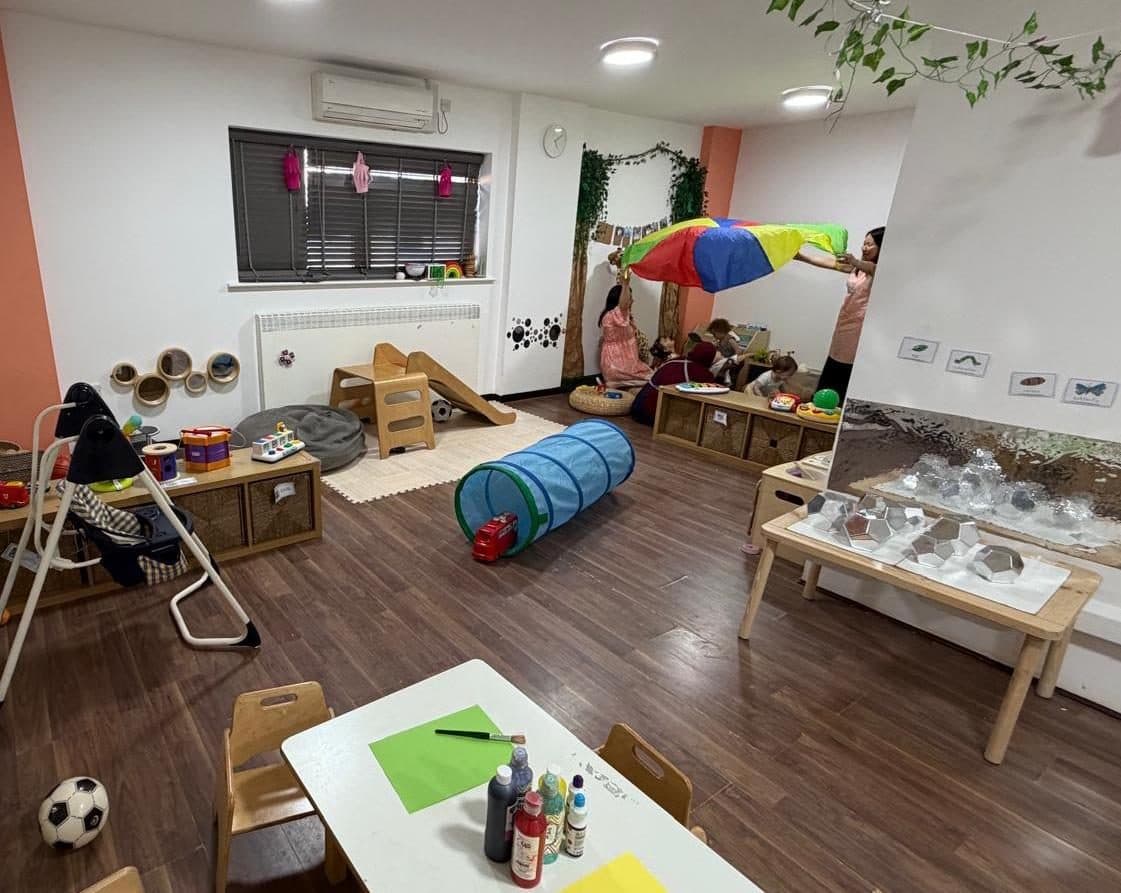
If you would like to see how we support communication and language in the nursery day, we would love to show you around. You can book a show-around at a time that suits you, or if you prefer something more relaxed, our free weekly Stay and Play every Friday morning is a lovely way to see the nursery in action and meet the team with your little one beside you.
Come and see us for yourself
Book a relaxed tour of Blossoming Minds Daycare and meet our team.
Book a tourOther guides you might like
Child Development
What Is the EYFS Framework and What Does It Mean for Your Child at Nursery?
The EYFS framework shapes everything that happens in nurseries and reception classes across England. Here is what it actually means in practice, and how we bring it to life at Blossoming Minds Daycare in Greenwich.
Choosing a Nursery
How to Join Blossoming Minds: A Step by Step Guide
Everything that happens from your first enquiry to your child's first day, including tours, applications, funding and getting set up on Famly.
School Readiness
Is My Child Ready for Nursery? School Readiness Explained
School readiness is about much more than knowing colours or counting to ten. Here, I share what it actually means in practice and how nursery helps children build the foundations they genuinely need.
Frequently asked questions
At what age should I be concerned if my child is not talking much?
Speech development varies widely between children. As a general guide, we would expect most children to have a few words by 12 to 18 months and be combining words by around age two. If you have concerns at any point, speak to your child's key person or health visitor. Early conversations are always worthwhile, even if there turns out to be nothing to worry about.
How does Blossoming Minds support speech and language development during the nursery day?
At Blossoming Minds in Greenwich we weave language into everything: cooking activities, outdoor walks, mealtimes and book-sharing. Our key person approach means staff know each child well enough to pitch conversations at the right level. We also keep families updated daily, so you can build on what your child has been doing and talking about at nursery.
Does screen time affect speech development in young children?
In our experience, the issue is less about screens themselves and more about what they replace. Passive screen time can reduce the back-and-forth interaction that builds language. We encourage families to prioritise conversation-rich activities where possible, particularly at mealtimes and during everyday routines like getting dressed or cooking together.
Can I come and see how Blossoming Minds approaches communication and language before enrolling?
Absolutely. You are very welcome to book a show-around to see the nursery and talk through how we work. Alternatively, our free Stay and Play sessions run every Friday from 10am to 11am and give you a chance to explore the space and watch the team in action with your child beside you.